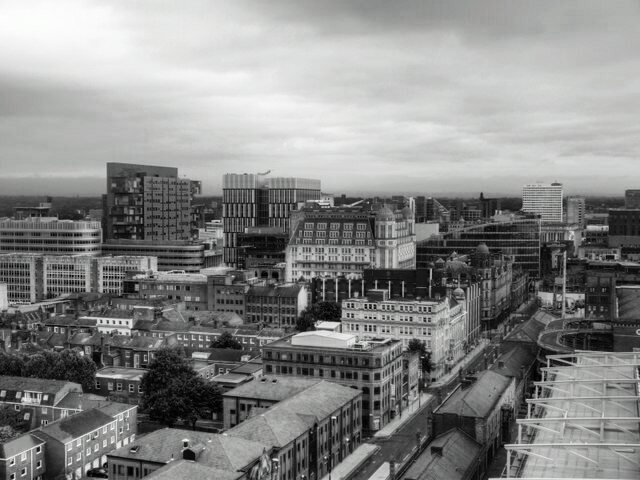
Reaching consensus in planning process; a quick review of NPPF
September 10th 2018
Reaching consensus among different planning stakeholders regarding the viability of proposed development projects is one of the fundamental challenges facing planners and policy makers. The draft of National Planning Policy Framework (NPPF) addresses many issues associated with the local plan making process and planning application process in effective manner, but there is still uncertain issues embedded with the planning application process on development projects.
In general, the local plan making process creates a collective platform for planning stakeholders, it does so through maintaining community participation methodologies. Item No. 3.16.a of the Draft copy of NPPF indicates the importance of local communities involvement in setting common vision and objectives for their neighborhoods. In contrast, after planning applications have been approved by the local authority, tensions are usually raised over the viability of proposed development projects. This takes the form of disagreement and conflict of interest between local community sectors and developers. This is due to lack of engagement in the planning application process, as town and city councils examine the viability of proposed development projects without consulting local communities and other project stakeholders.
There is no doubt that all developers tend to maximize their profits while delivering their development projects proposals. Making profit should not contradict the project sustainability, as social outcome is one of the main elements of sustainability, therefore, local community participation is a crucial factor in achieving successful viability examination. In this context, the draft copy of NPPF tend to send recommendations for developers to create space for local community in preparation of development projects. Nevertheless, there is still no statutory enactment to maintain the advantage of involving local communities in the planning applications process. Hence, reaching consensus becomes a real obstacle facing the planners working in local authorities. Thus, there is a need to review item no. 41 of the draft copy of NPPF in the light of creating statuary enforcement for the sake of legislating participation among different type of project stakeholders during the planning application process.
In conclusion, the draft copy of NPPF reflects the importance of local communities participation, whether in the plan making process or during the planning application process. The local community participation is well maintained by statutory enforcement in plan making process. Yet, during the application process there is no any legislative obligations to ensure the participation of local communities. This situation creates a space for maneuvering, disagreement and uncertainty between local communities, council authorities and developers over the viability of development projects.
Solving this issue should be through statutory obligation that demonstrates the participation of local communities in the planning application process. This would then ensures transparency, reduces uncertainty and stimulates collective agreement over development projects outcome.
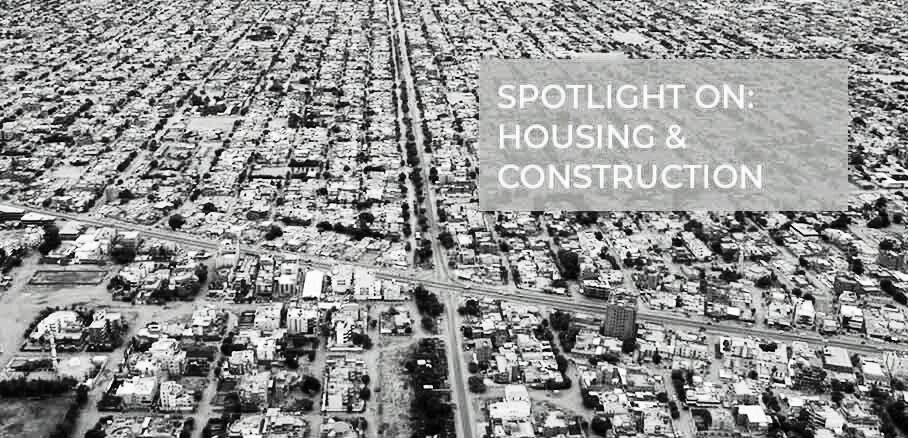
Policy Reform, not Evictions! The Case of Slum Urbanisation in Khartoum, Sudan
September 20th 2018
A radical reform of Khartoum’s housing policy is required to improve the living conditions of slum dwellers. For this, we need to examine the socio-economic situation of the urban poor and of those who live in the city’s informal settlements.
Slum Urbanization
The population of Sudan’s capital, Khartoum, jumped from 245,000 in 1956 to more than 7 million in 2012. More than 50 per cent of residents are living in informal settlements and squatter settlements on the outskirts of the city, or in neighborhoods that lack basic infrastructure. These households live in slum conditions; they have no access to clean water and sanitation, their living spaces are overcrowded, and their accommodations lack durable living structure and security of tenure. Consequently, slum households are extremely vulnerable to climate change, diseases, and crimes. This vulnerability is exacerbated by a local government that, instead of developing solutions, poses the constant threat of forced evictions.
This lack of reasonable response by the government is partly due to a very peculiar perspective on urbanization among policy makers. They tend to perceive urbanization as depopulation and degradation of rural areas, as a main cause for poverty, and possibly as a seedbed for political movements that would threaten the dictatorial regime.
Due to the government’s unwillingness to deal with the realities of the urban poor, Khartoum is exposed to rapid “slum urbanization”, meaning that as long as urbanization processes continue the slums will keep growing. This has been an ongoing trend: for instance, in 1960 only 0.5 per cent of Khartoum residents had no access to improved water network. By 2010, this had jumped to 45 per cent.
The Lack of Appropriate Policies
The Khartoum local government lacks an inclusive policy to meet the growing demand of adequate housing. Instead, it directs its efforts at attracting financial capital by selling land to investors. But those highly profitable property projects, like the Al-Mogran Development Project, only cater to the demands of wealthy people.
In contrast, public housing projects still fail to meet the demand for adequate housing among the urban poor. Most of the projects are located on the outskirts of the city, some of them up to 20 km away from the city center. The absence of functioning public transport makes it difficult for residents to reach work places, hospitals, and other institutions located at the city center.
The Comprehensive National Strategy 1992-2002 considers public land as a commodity that can be used and sold to finance the local governments. This policy legitimizes the government to sell land to investors without consulting the local community while allocating dead lands on the outskirts to house the urban poor.
According to the national government, the New Urban Agenda is the guideline for urban development and slum upgrading in Sudan. The Agenda emphasizes the promotion of resilient and resource efficient infrastructure, including the rehabilitation and upgrading of slums and informal settlements.
In effect, however, there is no implementation of the agenda. Instead, there is a lack of collaboration and participatory planning approaches among urban stakeholders and policy makers in delivering an inclusive approach to urban development. This could be seen, for example, when the Ministry of Finance refused to fund a sanitation plan developed by The Ministry of Urban Development of Sudan which was part of a larger of slum upgrading project. Consequently, 49 per cent of the Khartoum urban population still has no access to improved sanitation.
Forced Evictions
Instead of slum upgrading, government officials adhere to forced evictions and demolishing of squatter settlements. This tends to happen without ensuring fair relocation mechanism for the dwellers. While authorities often claim that they initiated consultations about relocation and compensation with residents prior to the evictions, evictees claim that this is not true, for example in the case of the El-Shajara neighborhood. In 2016, the local authority forcibly evicted local communities settled in the area, surprising the residents with a large number of police and security to evacuate and immediately destroy the houses in the area. This is a common pattern: with most evictions, there is no previous notice sent to slum dwellers, no compensation delivered, and no relocation mechanism enacted.
Local authorities justify their actions as a necessary means of a citywide re-planning process which includes demolishing “illegal buildings.” Yet, the reason behind these evictions often is to sell the informally inhabited areas to investors without including the slum dwellers in the planning process. The onsite realities show that more than anything else these actions cause a lot of harm to slum dwellers. Cases of physical violence, including the use of batons, tear gas, and live ammunition against evictees and those who demonstrate and stand in solidarity with them have been reported frequently.
Insufficient Efforts
The local government of Khartoum has tried to develop solutions to the housing issue. For example, it established The Housing and Construction Fund in Khartoum City (HCFKC) aimed at facilitating access to adequate housing for all social classes. But it failed to do so due to several reasons. First, HCFKC relies on profits from luxury housing for funding. Because of the low demand for luxury housing, HCFKC is not getting enough funds to create public housing. Second, access to public housing is based on a rating system that, for example, prioritizes applicants who have lived in the city for more than ten years, excluding a significant number of people who were among the many who arrived in the city in recent years. Third, eligibility regulations dictate that applicants have to present prove of formal employment, excluding the majority of poor people who work in the informal sector. Finally, most public housing projects are located outside the city center, excluding those whose income does not allow them to travel far distances to their workplaces.
An Urgent Call for Policy Reform
Urbanization is a source of social capital and if it is well managed, there are many opportunities for further urban development growth. If not well managed, this process has negative impacts, as can be seen in Khartoum’s slum urbanization. This situation dictates, among other means, a radical reform of current policies. Policy makers should therefore adhere to the following recommendations:
Develop a constitutional right to adequate housing that includes clear measures regarding affordability, culture adequacy, secure land tenure, access to social services and infrastructure, appropriate space, durable building structure and protection against climate change hazards.
– Develop slum upgrading program that make use of existence building structure and local skills
– Make suitable housing allowances for employees in public and private sectors obligatory and develop a social security system for workers of the informal economic sector.
– Support the mass production of local building material, control its cost to ensure affordability, and ensure an environmentally friendly production process.
– Establish housing funds that work for the urban poor and workers of the informal market by ensuring suitable lending processes, down payment rates, interest rates, and mortgage terms.
– Allocate an amount of the annual budget to public housing. Ensure appropriate taxing systems for capital obtained from selling land, for vacant lands, and for the commercial use of land. Invest these additional financial resources into improvement of infrastructure in slum areas.
– Support political parties, organizations, and local communities that address housing issues. Create a participatory housing committee to include all city stakeholders, including slum dwellers, in urban planning processes.
– Provide workers, planners, and staff working in local councils and public sectors with courses on efficient housing.
– Develop architectural models for sustainable and low-cost housing. Develop an integrative approach to urban planning.
To really make a change towards the vision of the New Urban Agenda, a new policy has to employ an inclusive approach that responds to the needs of the poor, instead of a neoliberal approach that focuses on attracting foreign capital to implement luxury housing projects serving the interest of high income people.
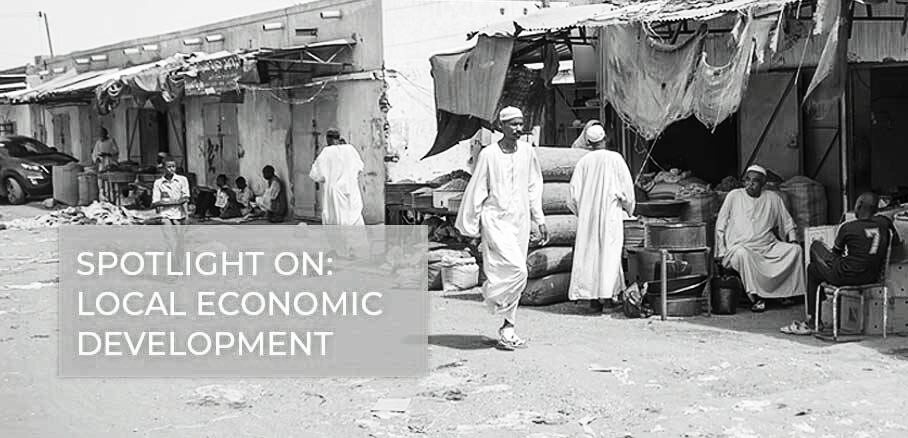
Urban Regeneration After Catastrophe: The Fire at Omdurman Market
January 29th 2019
After the failed response of the local government to the fire at Omdurman Market, it is time to think about an adequate urban regeneration plan that would boost local economic development in Omdurman City.
A massive fire that broke out in Omdurman Market in December 2018 destroyed hundreds of retail stores and cash worth millions of dollars. The fire was caused by an electric explosion and left many retail shop owners and vendors without any income. In spite of this, the local government’s compensation plan provided only insufficient financial support to the people affected, rather than boosting the local economic development through a sustainable urban regeneration plan.
Local government officials stated that the reason the fire was able to spread so quickly was the lack of an appropriate market “master plan”. The mayor of Omdurman City said that firefighting vehicles were unable to access the location of the incident due to the narrow roads, which in turn meant that firefighting was inefficient. However, he neglected the fact that the market lacks its own independent firefighting system, which would have prevented such a disaster.
Planning for Urban Regeneration
Omdurman Market is a vibrant place located at the heart of Omdurman City, Sudan. Surrounded by residential neighborhoods, colonial administrative buildings, religious sites, a university and a football stadium, it covers an area of about 150,000 m2. Thousands of small shops located on plots of land for commercial use provide city residents with all kinds of produce and goods.
But Omdurman Market is more than just a market – it is the heart of downtown Omdurman City. At this point, the government’s compensation plan is not considering the value of the available land resources within the market zone. By selling land, the government could fund a comprehensive reconstruction plan and offer additional emergency relief to the citizens. Thus, there is a need to think outside the box to come up with an urban regeneration plan that would serve the interests of retail owners, vendors, and city residents.
In the following, I am stating some recommendations to be discussed among city stakeholders:
1. Subdivide the existing commercial land into smaller plots that would fit more businesses to finance the reconstruction of the whole market, while creating opportunities for further commercial development at the same time.
As the city is growing and adding new residents to its population, there is an increasing demand for goods and products. Subdividing the existing commercial land would allow for new retail investments, while the revenue from selling the divided commercial land could be allocated to the refurbishment of the existing retail blocks, public space improvements, and the provision of an independent firefighting system for the entire market.
This way, it is possible to create a win-win situation for retail owners, the local government, and city residents. The municipality can generate financial resources for reconstruction work, the retail owners can reorganize their commercial activities in an improved workspace, and the city residents can enjoy the market’s revived public life.
2. Develop a specific Form-Based Code (FBC) for buildings and public space regulation to promote a vernacular architecture style for building features, signage layout, and street utilities.
Regulating the reconstruction process with a Form-Based Code that would emphasize the best utilization of local material produced by the merchants of Omdurman market can foster economic development while promoting an iconic cultural site for local residents and tourists.
3. Establish an appropriate traffic management for the road that surrounds the market while transforming the inner market roads into pedestrian-friendly, walkable lanes.
At the moment, during rush hour it takes up to one hour to travel by car across the market area, whereas it takes a pedestrian only 15 minutes to do the same. However, it is still challenging for pedestrians to walk through the market due to the absence of walkable sidewalks. This problematic situation reduces social mobility and increases travel time, leading to a decrease in purchasing power, late arrival to retails, and a reduction in local economic productivity.
In contrast, transforming the road area usually taken up by cars into pedestrian-friendly walkable lanes, along with an introduction of appropriate traffic management for the surrounding road would reduce air pollution, increase economic productivity and stimulate more commercial activity between the city residents and retail owners.
4. Create livable public space and support night-time economic activities
Omdurman Market consists of two main squares, Albosta Square and Alaskila Square, which are located on the edges of the market site. Both are wide enough to serve as gathering areas and can thus serve as spaces for vibrant public life. However, as of yet there is no official sustainable approach to support socio-economic activities on these squares. Such an approach would allocate spaces for live music cafés, restaurants with outdoor seating, handicraft bazars, and other entertainment activities integral to livable public space.
5. Allocate a space for street vendor activities while regulating their working conditions
Estimations show that about 20 per cent of economic activities at Omdurman Market are the informal activities of poor tea sellers, booksellers, greengrocers, and peddlers. Street vendors are working in an informal manner because they tend to avoid paying rent and tax fees so as to secure enough income to cover their household living expenses.
These informal activities are a cornerstone of the cultural activities taking place in the city. But street vendors are vulnerable to forced eviction and air pollution due to the absence of work entitlement. Local government should consider subsidizing street vendors with appropriate working space. This would be an effective instrument to reduce poverty and simultaneously boost local economic development.
Public Consultation Should Be at the Heart of Urban Planning
At city level, there is a lack of public consultation processes for urban development projects. The mayor is nominated by the central government and not elected by the city’s residents. There is also an absence of devolution that would give local government access to generate more revenue and distribute wealth. New democratic laws are required that would ensure a sustainable outcome of the urban planning process.
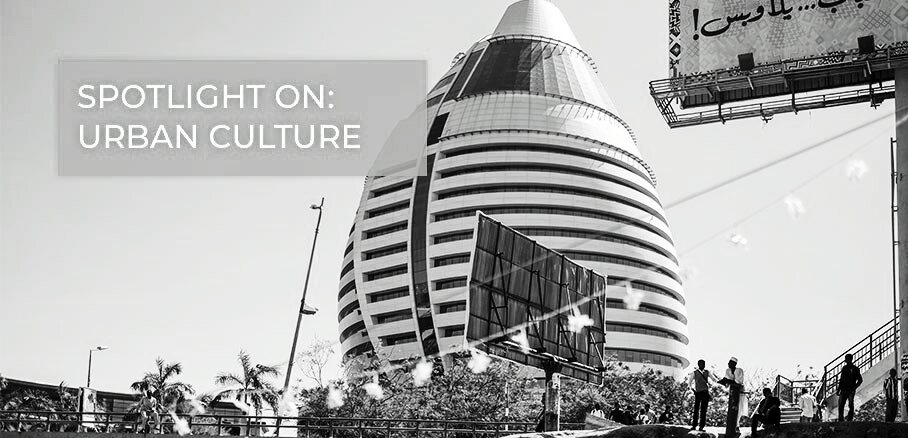
Khartoum: Urban Chaos and the Reclaiming of City Character
February 13th 2020
Urban development in Khartoum city is shaped by different types of irregular settlements – a manifestation of inappropriate planning policies that lead to chaotic urban forms due to their inability to control property development. Cities can avoid such chaotic development by establishing policies to coordinate the process of land use planning, architecture design code, and building construction activities to ensure a predictable form of the city that reflect the local cultures and innovations. But this is not always the case in Khartoum city.
The city features many poor urban structures which harm the appearance of the city. There is a need for a major shift in urban planning to ensure a better quality of spatial patterns that is accompanied by an increase in socio-economic resources available for property development.
A Loss of Physical Character
Many researches demonstrate that local earth architecture and traditional roofing systems constitute safe and stable building techniques. They don’t, however, address the problem that there is a lack of design code that would change Khartoum’s building culture and thus make the city more attractive.
Current property development lacks a sense of proportions; the city has lost its physical character. Proof of this is the irregular spatial structure, poor architecture features, and uncoordinated open space. Along with other minor clutters (such as sign proliferation, poor finishes, visible mechanical, electrical, and plumbing (MEP) utilities, inadequate external material, and dull external colours), this leads to a dramatic display of visual pollution which reduces visual amenity, distracts public movement, decreases property value and, above all, disregards the local urban culture and vernacular traditional innovations.
There are different arguments on the causes of such chaotic urban patterns. Some see them as a result of noncompliance with approved architecture design and of poor building inspection, meaning that the responsibility is shared by council and contractors. Others claim that unauthorized building extension and partial building constructions along with the misuse of building assets are the main reasons behind the spatial chaos. These arguments do not seem to suffice, seeing that even in the best-case scenarios of many first-class new residential neighborhoods, where buildings comply with permitted architectural design, additional irregular settlements remain.
It seems therefore more promising to look at land use planning systems for potential causes. Property development processes are often driven by (revised) colonial land use planning systems and building regulations. They lack an adequate framework to address the quality of built environment based on the available building material and labor skill resource.
Insufficient Planning Systems
The current land use planning system is meant to accommodate urban growth and determine appropriate density of the city through a zoning-based regulation that subdivides land into different residential, commercial, and industrial districts and plots. Additionally, building regulations are meant to control the setbacks, floor area ration, size, heights, and the placement of each construction to allow natural ventilation, user privacy, a space for building service, and user movement.
Even so, the land use planning system along with the building regulations have shown no power to control the shape of urban development. Thus, there is a need to move from land plan approaches to sustainable block plan approaches of form-based code, where land use is coordinated by a design code to ensure appropriate layout, features, components, and specification of building units, landscape, open spaces, retail signage, and external building materials. Elements of urban form are identified at the earliest stage of planning process. Thus, planners can consequently design along these identified forms, ensuring livable and sustainable public spaces.
A Set of Recommendations for Khartoum’s City Council
– Set a spatial vision for the city that guides the production of livable built environment and public spaces.
– Enhance the use of locally available resources and vernacular architecture innovations.
– Replace the current zoning regulation with a form-base code approach.
– Architectural design approval should be controlled by a submission of detailed architecture design drawings that comply with the urban design code set by local authorities.
– Do not grant building permissions until financing is ensured in order to avoid only partial completion of construction processes.
– Ensure to issue occupancy certificates only for building construction in accordance with the authorized design code.
– Develop enforcement regulation to investigate planning breaches and variance throughout the property development process.
– Prohibit visible MEP utilities that distract building facade design.
Allocate space for local art and advertising posters while prohibiting unregulated use of external building patterns.
A Note to Critics
Such planning interventions surely would cause some criticism, as many city planners tend to advocate a discretionary approach over a regulatory system. Many planners claim that such an approach is dictating a single view on city form while limiting the capacity for innovative architectural ideas. Others claim that these regulations may not be workable for developing cities with limited financial resources, where informal activities are mainstream. Finally, many planners argue that these recommendations would increase property value and limit the capability of low-income residents to access higher living standards.
However, all these concerns can be tackled if certain issues are considered. First, form-based code has to develop through participatory consultations between the city council and other urban actors to build a collective agreement on spatial vision. It needs to be ensured that this process regards the city as public asset of its residents rather than as private interest of landowners.
Second, these recommendations are planning tools – not a development outcome. It is their utilization of socio-economic resources along with vernacular architecture innovations that makes them relevant to the local context.
Finally, design codes can be based on simple layout and cost-effective building material to ensure affordable housing units.
Khartoum faces dramatic unplanned urbanization, causing irregular formation of settlements. Thus, there is a need to control urban growth through a sustainable design code that is based on available resources and cultural innovations if the city wants to ensure better quality of urban public life.
Designing Streets for People, not for Cars: The Case of Khartoum
May 12th 2020
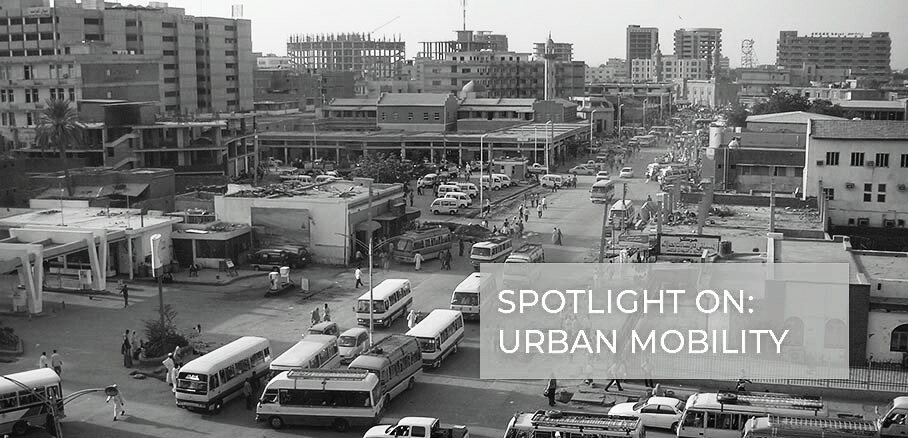
In the past, low urban density, efficient street planning and an appropriate transport system made the streets of Khartoum’s downtown area accessible and livable for all inhabitants. Indeed, the streets were designed as cross-grid pathways to facilitate public mobility in the administrative zone of the city. Cross driveways were allocated for private mobility, while the grid driveways meant to enhance public mobility through a diverse set of public transport means, along with pedestrian-friendly lanes.
Nowadays, however, pedestrians, car drivers, and public transport users in Khartoum city are struggling with poor street conditions. Public streets became an increasing source of air, waste, storm water, and light pollution due to the rapid growth of fuel-based vehicles, inappropriate street levelling, an absent storm water drainage system and irregular urban design for side buildings. This in turn harms the health of city residents significantly, while also affecting their mobility.
After all, recent statistics prove that fuel-based vehicles produce 75 per cent of carbon monoxide pollution and 27 per cent of greenhouse gas emissions which can cause chronic pulmonary diseases and lung cancer. Estimates also show that traffic on irregular and non-pedestrian friendly streets not only increases travel time by 50 per cent, but also reduces economic productivity by 20 per cent, while doubling the rate of traffic accidents.
Making Walkability and Public Transport Top Priorities
As a result, Khartoum needs to urgently enhance public mobility – and what stands in the way is not, as often believed, rapid unplanned urbanization. Between 1955 and 2010, Khartoum’s population grew from 250.000 to 7 million, with a simultaneously rising number of vehicles. Yet, urban density has decreased, proving that urbanization as such may not be the main issue here.
The culprit seems to be the apparent lack of sustainable public street plans that accommodate new varieties of urban mobility. Thus, this situation calls for a policy shift towards safe, eco-friendly and sustainable strategies that prioritize the efficiency of walkability and public mobility.
Indeed, there are many reasons why walkability and public transport planning should become top priorities for the local government in Khartoum. First of all, public transport and walkable lanes have much higher capacities for social mobility than private car lanes, being able to transport 25.000 and 9.000 people per hour, respectively. Private care lanes only have the capacity to transport 1.600 people per hour. Secondly, the frequency of trips through walking and public transport is significantly on the rise, and Khartoum must address this demand accordingly. For instance, over 75 per cent of school trips and 50 per cent of trips to local markets, health care centers or social visits are on foot.
Last but not least, the rising number of traffic accidents requires an urgent shift in Khartoum’s urban layout. About 70 per cent of traffic accident victims are pedestrians after all, while 60 per cent of traffic impactors are public transports vehicles. Currently, the streets of the city show no paved sidewalks and there is a lack of designated lanes and space for public transport. This emphasizes the need for urban planning mechanisms that primarily address the needs of pedestrians and public transport users.
Turning Streets into Sustainable Public Spaces – Quick Tips
Evidently, we need interventions of tactical urbanism that tackle the complicated challenges Khartoum faces – and in times of scarce financial resources, it seems even more important to make use of the many opportunities that are already available. The overall goal should be to create green, safe and accessible public streets that promote the city’s livability and ensure an appropriate development viability. To that end, in the following you can find a list of quick tips and recommendations that are not only applicable to Khartoum, but can be used for public street planning in any urban setting:
Promote Public Street Livability:
Prevent visual pollution through vernacular architecture along with signboard arrangements.
Enhance socio-economic activities by regulating the commercial use of land on side buildings of main streets while creating better workplaces for street vendors.
Create standards for street architecture utilities to promote safe, clean and accessible streets for all.
Allocate land for pedestrian-friendly lanes to enhance public mobility.
Enhance Public Transport Accessibility and Mobility:
Create green-wave traffic flows at street junctions to reduce traffic congestion and travel time.
Allocate a designated lane for public transport to enhance public mobility.
Build shaded bus stops to enhance public transport accessibility and advocate for the use of public transport.
Transfer narrow congested streets into one-way streets to enhance transport mobility.
Create appropriate intersection visibility between vehicles at street junctions.
Create Eco-friendly Mobility Systems:
Promote the use of eco-friendly vehicles through controlling the process of vehicle imports and vehicle license renewal.
Create flood zone maps while maintaining appropriate levelling of streets to prevent the impact of flood and heavy rain in autumn season.
Create green street systems to observe storm water while enhancing street landscaping.
Use of shading, climate-resilient trees to protect pedestrians from direct sun light.
Use of solar light poles to reduce energy consumption.
Participatory Planning:
In order to develop well-structured, needs-based and inclusive objectives, various urban stakeholders have to be included in the process from the beginning on, such as the ministry of planning, environment councils, local governments, consultancy firms, transportation authorities, ministry of finance, land authorities, along with district residents, retail and side building owners.
 KHALAFALLA OMER