Principles for Urban Street Planning; The case of Khartoum city
The Autumn’s Workshop
The Future University
Khartoum, Sudan
02 November, 2019
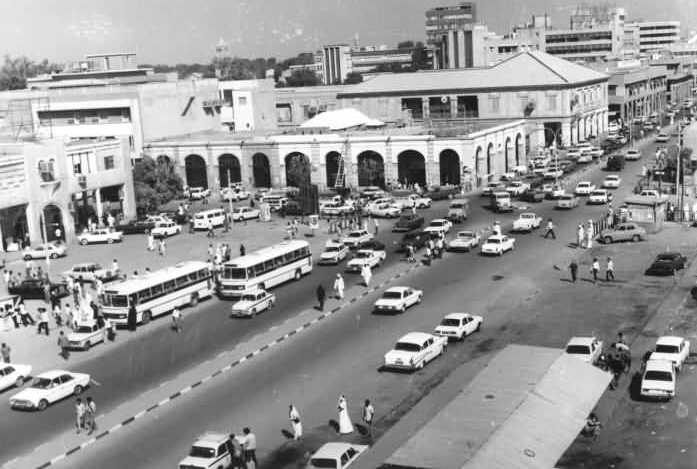
Public streets in Khartoum city evolved in colonial era as a cross-grid networks, with high capacity for different mode of mobility that serve the high income people, official professionals and labors working in the administrative zone of the city. In contrast, current public streets become a source of air, waste, visual pollution and traffic congestion with law capacity for social accessibility and mobility. In addition, Irregular, dark dead-end and unpaved streets is among other reasons that makes streets a source of crimes and traffic accident.
On site observation shows that lack of appropriate sustainable plan, automobile growth, lack of eco-friendly vehicles, poor traffic management and inadequate side building architecture designs are among the reasons of current problematic situation. Traffic management analysis proves that claim, the ratios of Land Allocated to Streets (LAS), Intersection Density (ID) and Street Density (SD) indicate very low rate of street mobility and accessibility compared to other cities in developed world or even developing countries.
Rabid slum urbanization has led to uncontrolled urban sprawl, unplanned socio economic activities and a raise of different mode of mobility. On the other hand, city plans tend not to accommodate the new urban forms to enhance the sustainability of public streets, this is because streets had been planned as a pathway for private vehicles rather than a place for public good.
However, there are many embedded opportunities for tactical urbanism solutions. First, appropriate examination of social mobility and accessibility raises some long term solutions when plan for walkability and public transportation, due to the reality that public transport and walkable lanes has 12 time more capacity for mobility than car lanes, taking into consideration that 80% of trips to schools, markets, social visits and entertainment places are taken through public transportation or by walking, while most of city streets has a capacity to add 1-2 lanes at each side of the drive way. Furthermore, there is an opportunity to make streets eco-friendly place due to availability of resilient trees of Copperpod, solar energy resource and high capacity for low cost vernacular architecture and green streets designs. Nevertheless, in the time of financial resource scarcity, reaching viable public steers is obtainable through cost effective budget allocation, use of plastic road construction technology and incremental area based plans.
The addressed challenges and opportunities required a shift collaborative plan approach to create livable, ecofriendly, accessible and viable streets that would involve different city urban actors to brought a well-structured public street plan that works for public good.
 KHALAFALLA OMER