Khartoum Residential Settlement: The Paradox of City Urban Fabric
Doctoral Workshop: Approaching Research Practice in Architecture
TUM Department of Architecture
Munich, Germany
13 October – 14 October, 2021
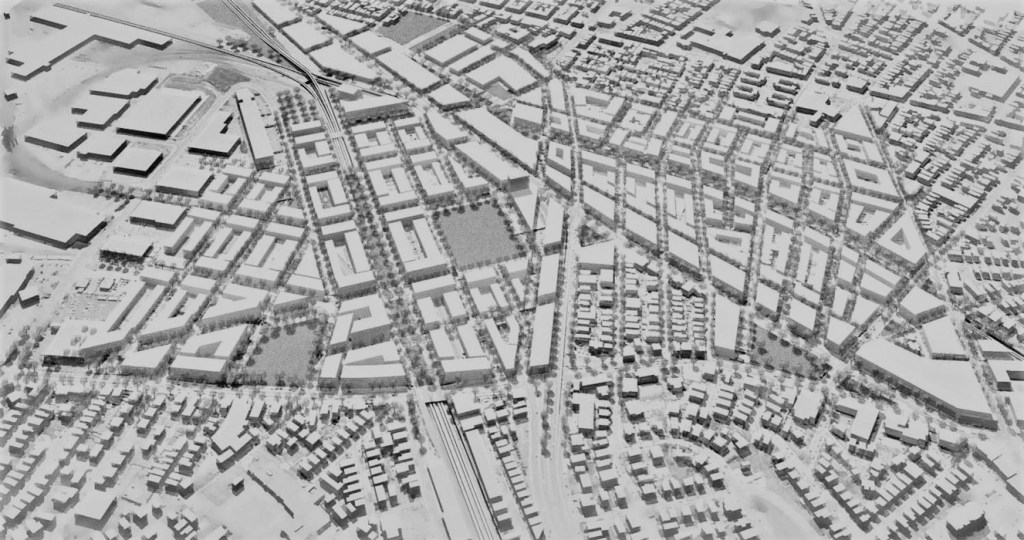
The livability rate of Khartoum residential settlements is very diverse in term of living standards, work environment, access to public service, street connectivity and open place sociability. This is due to the complexity of city urban space, which evolved according to many politics’ dynamics. In fact, there is different social networks, economic powers, and planning system that drive the rise of urban fabric approach. However, It believes that urban fabric consists of visual spatial character such as building type, layout form, open space, and streetscape. But on the other hand, each set of urban fabric have its own urban context, and place spirit that identify the character of the spatial pattern.
In that sense, the research is about to study the urban fabric implication as a matter of urban process rather than a static urban artefact. In return, such theoretical approach can facilitate better understanding of the cross-sectional Socio-political dynamics that underpin the character of urban fabric. Thus, the research is about to deliver historical, spatial, and social analysis techniques to examine the urban context, patters, and life that impact the formation and transformation of the city urban fabric at the scale of city residential settlement.
The historical view will identify the urban context of social dynamics, economic forces, and legal frameworks that drive the urban fabric process with reference to the pre- and post-colonial political trends. To approach consolidated historical review, the social dynamics will be examined according to social networking, class struggle, culture approach, and institution visons. Moreover, the study of economic forces will explore the role of markets trends and capitalism on creating new forms of spatial supply and demands. Nevertheless, the legal frameworks will be traced to study impact of social contract, laws, regulation, and planning approach on the city design process.
In conclusion, the research proposal is about to deliver innovative theoretical framework to study the implication of the city formation process with reference to the political process and the onsite public experience.
 KHALAFALLA OMER